

In high-end precision manufacturing, intelligence is a core competitive advantage. As a world-class precision manufacturing group, Company L has built strong vertical integration and an advanced intelligent manufacturing system, deeply embedding itself in the core supply chains of leading global consumer electronics brands. Through continuous digitalization and intelligent transformation, it has become a key driver of China’s precision manufacturing evolution.
Project Background
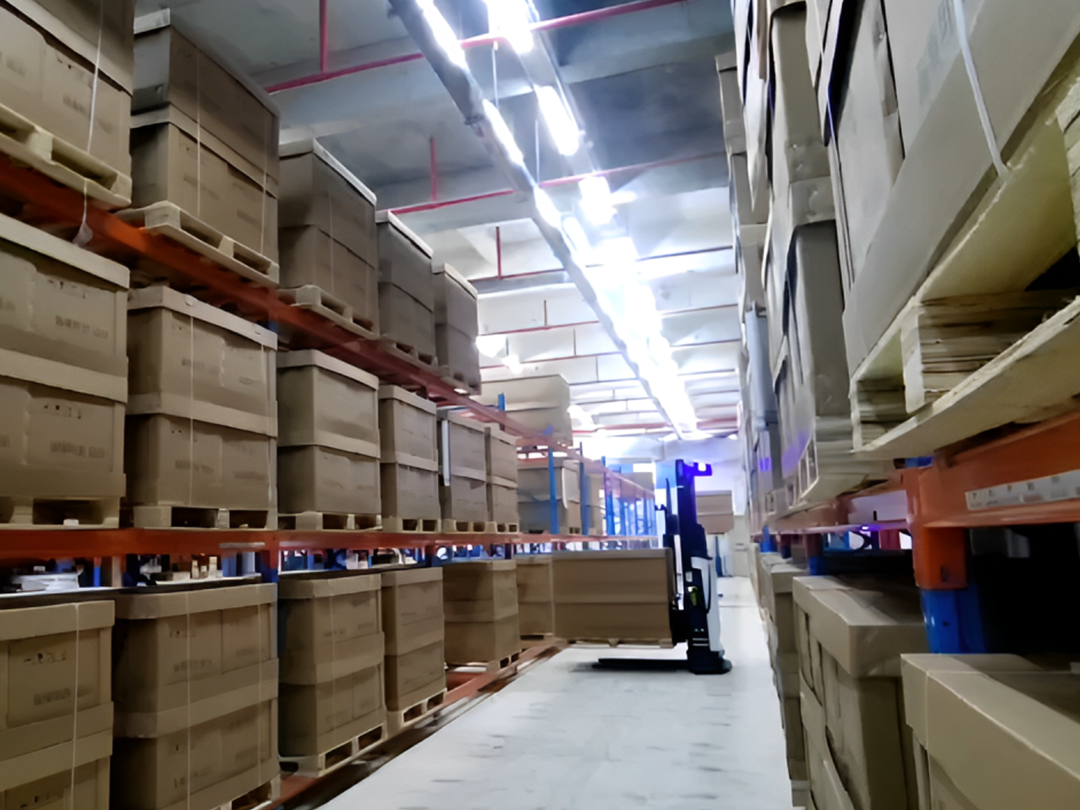
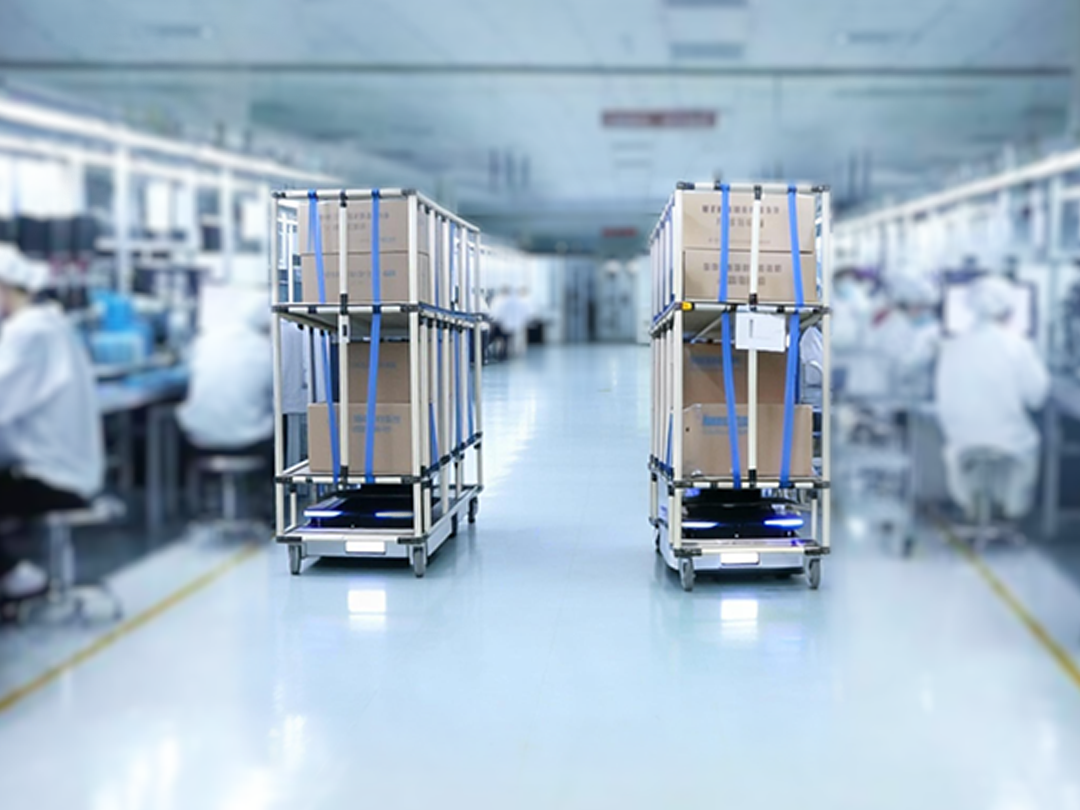
Company L had already achieved a foundational level of automation in its production logistics system, deploying robots from multiple vendors:
- Brand A: 7 latent AMRs, 7 autonomous forklifts, and 4 roller AMRs
- Brand B: 5 latent AMRs
These robots played an important role in transporting raw materials, WIP, and finished goods.
However, as business volume grew rapidly and production cycles accelerated, the existing robot fleet could no longer support new operational demands. Constrained by legacy systems, simply adding more robots no longer translated into higher efficiency.
Pain Points
Brand silos, no collaboration
Robots from different brands and models operated in isolated systems, unable to work under unified scheduling commands—resulting in fragmented information and operational silos.
Efficiency bottlenecks, heavy manual reliance
Limited global scheduling capability led to unbalanced task allocation, frequent path conflicts, low efficiency, and frequent manual intervention, driving up O&M costs.
System fragility, brand image impact
In complex and dynamic environments, insufficient system robustness caused multi-robot congestion—even complete deadlocks—during important customer visits, disrupting operations and damaging corporate image.
These challenges revealed that the real issue was not a lack of robots, but the absence of a unified, intelligent “super brain.” Adding hardware alone only increased system complexity and risk.
Solution
To fundamentally solve multi-brand collaboration challenges and build an open, flexible logistics system for the future, Company L introduced Lanxin’s multi-brand robot scheduling system, VMR-RCS.
Unified Intelligence for Multi-Brand Operations
“One Map” Mixed-Fleet Scheduling
VMR-RCS integrates robots of different brands and types into a single scheduling platform. Based on one unified global map, the system performs centralized task assignment and path planning, enabling orderly and efficient collaboration across mixed robot fleets—fully breaking down brand barriers.
Standardized, Open Integration Framework
With flexible, standardized interfaces, VMR-RCS not only integrates existing equipment but also delivers strong scalability. New AMRs from any brand can be added like building blocks, giving enterprises full control over future equipment selection.
Project Results
With VMR-RCS deployed, Company L completed a comprehensive upgrade of its intelligent logistics system. The project exceeded expectations in both operational efficiency and management optimization, while laying a solid foundation for flexible expansion.
To support continued growth, 10 additional Lanxin latent AMRs were later introduced, bringing the total fleet to 33 robots and further boosting overall efficiency.
1. Quantified Efficiency Gains
(All data from on-site measurements)
- Task throughput increased from 186 to 277 (+49%)
- Task cycle time reduced from 25 minutes to 18 minutes (+24%)
- AMR utilization reached 100%, fully unlocking equipment potential
- On-time task completion improved from 88% to 100%
- Idle equipment cost reduced from 3 hours per robot per day to zero
2. From Experience-Driven to Data-Driven Decisions
Beyond efficiency gains, the project transformed management decision-making through VMR-RCS data insights and intelligent algorithms:
- Robot utilization balance improved from 62% to 98% through capacity prediction and real-time visualization
- Material arrival delays eliminated, reducing line waiting time from 80 seconds to 0 via dynamic task reassignment
- Daily transport volume increased from 2,137 to 2,365 tasks through mixed-fleet scheduling
- Overall equipment utilization rose from 88% to 98% with unified cross-brand data analytics
| Decision Scenario | Manual Decision Pain Points | Digital Decision Approach | Optimization Results |
| Robot Allocation & Utilization | Manual assignment with unbalanced workloads | Capacity prediction algorithms + utilization visualization dashboards | Task balance improved from 62% to 98% |
| Material On-Time Arrival | Over-early dispatch; unpredictable delivery rhythm | Big-data models calculate consumption cycles with dynamic task reassignment | Line waiting time reduced from 80s to 0s |
| Transport Task Volume | Cross-brand robots unable to handle the same task types | Task forecasting + mixed-fleet scheduling + dynamic allocation | Daily task volume increased from 2,137 to 2,365 |
| Overall Equipment Utilization | Data silos across brands; no visibility into real utilization | Unified data collection and analytics across all zones and robot brands | Average daily utilization increased from 88% to 98% |
Conclusion
The project has been successfully accepted. Through its partnership with Lanxin, Company L unified a complex, multi-brand robot fleet into a highly coordinated system governed by a single intelligent “super brain.”
The results go far beyond efficiency improvement and cost reduction. By enabling data-driven decision-making and eliminating brand lock-in, the project delivers long-term strategic value—establishing a truly flexible, future-ready logistics architecture.
This case clearly demonstrates that in advanced intelligent manufacturing, an open and intelligent coordination platform is far more critical than simply adding hardware. It serves as a strong reference for global manufacturers facing heterogeneous automation integration challenges.
Looking ahead, Lanxin is actively advancing the deep integration of scheduling software with embodied humanoid robots. This is not a simple technology overlay, but a forward-looking exploration of large-scale embodied intelligence collaboration. Unlike traditional AMRs that execute standardized tasks, humanoid robots are general-purpose mobile intelligent agents with human-like form and multimodal interaction. As they move from labs into warehouses, factories, and commercial spaces, large-scale multi-robot coordination will be not just a requirement—but the key to unlocking their full potential.